
Black Spot Triage for Dogwoods: Diagnose, Treat, Prevent
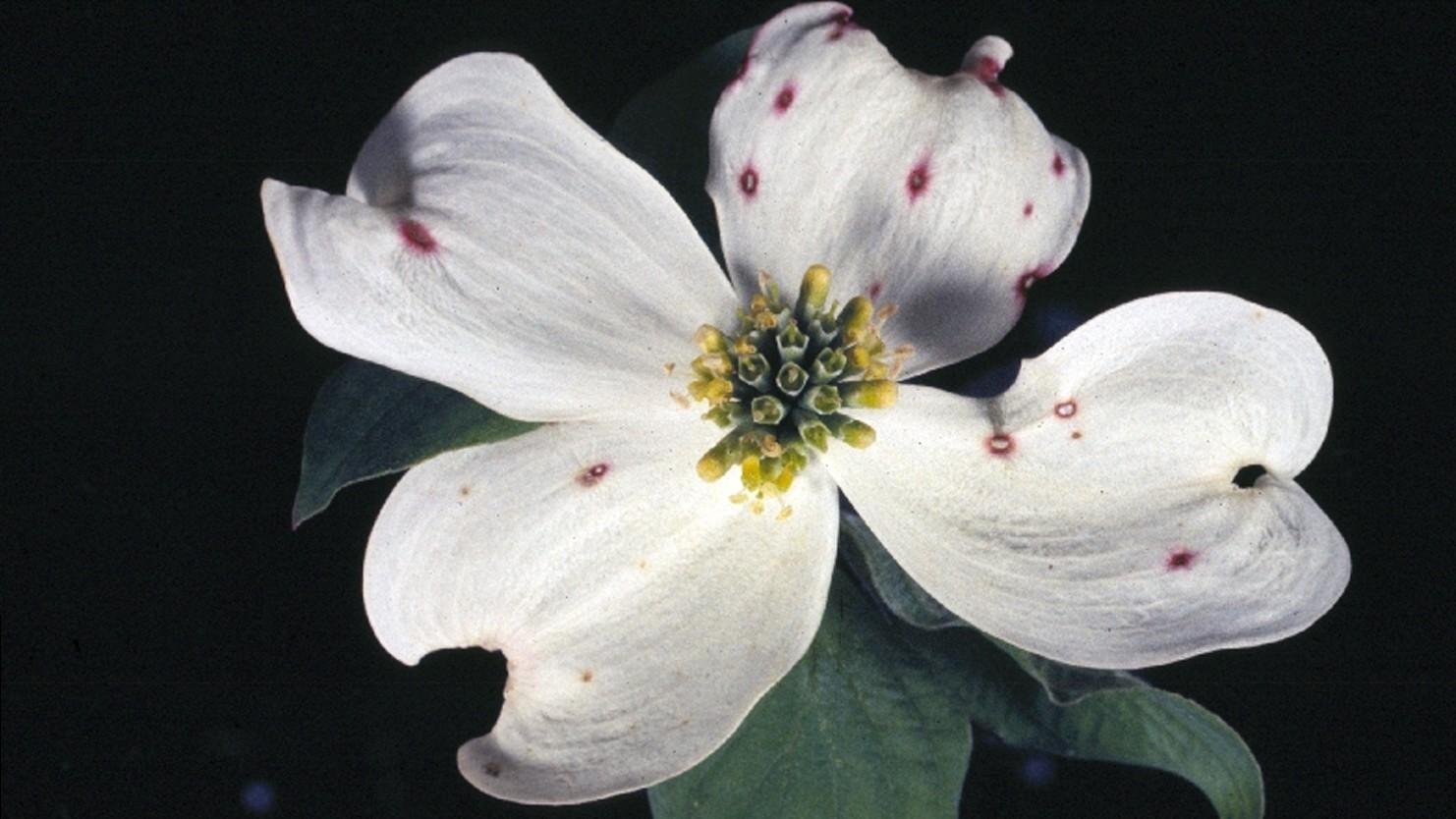
Spot anthracnose (Elsinoë cornii) symptoms. Florida Department of Agriculture and Consumer Services
Walk through any neighborhood during a soggy May and you’ll spot it: flowering dogwoods prematurely bronzing, leaves speckled with purple haloes, lower branches already thin. That pattern usually points to the same culprit—fungal black spot cycling faster than we can sweep up leaves.
Why fast triage matters
University and arboretum pathologists consistently report that leaf-spot fungi (e.g., Septoria, Gloeosporium, Colletotrichum) can trigger multiple defoliations on flowering dogwoods when spring stays wet and warm (University of Maryland Extension, 2023). Early confirmation protects canopy density and reduces inoculum that fuels the next weather event.
Step 1 – 60-second symptom snapshot
Use the table below to differentiate fungal black spot from abiotic scorch or nutrient issues. Descriptions are pulled directly from land-grant diagnostic keys (UMD Extension; Clemson HGIC).
| Indicator | What to look for | Notes |
|---|---|---|
| Lesion color | Tan to dark centers with purple or maroon halos starting along veins | Typical of Septoria leaf spot. |
| Fruiting bodies | Pinhead-sized black dots (acervuli) embedded in the lesion underside | Confirms sporulation (Missouri Botanical Garden). |
| Spread rate | Lesions enlarge within 3–5 humid days; coalesce on heavily infected leaves | Rapid expansion suggests active fungus rather than scorch. |
| Leaf drop pattern | Lower canopy yellows and drops first, moving upward | If lesions appear water-soaked with twig dieback, pivot to anthracnose (Discula) diagnostics instead. |
Step 2 – Confirm the diagnosis scientifically
Rule out abiotic stress – Sun scorch produces uniform browning on exposed leaf margins; it lacks concentric halos or fruiting bodies (UMD Extension).
Cross-check recent weather – A run of leaf-wetting rains + 75–85 °F nights strongly favors Septoria infection cycles (Clemson HGIC, 2025 update). Keep an eye on dew duration, too; leaf wetness sensors show that even short overnight mists can keep dogwood foliage wet long enough for spores to germinate, so record those microclimate quirks in your log.
Inspect new flush – Lesions on current growth mean the pathogen is still active; older leaves only may indicate a past infection.
Use a 10× hand lens – The presence of acervuli verifies a sporulating leaf-spot fungus and rules out purely abiotic causes (MoBot).
Step 3 – Treatment protocol (evidence-based)
Sanitation & pruning
Remove fallen leaves and prune heavily spotted shoots to reduce inoculum .
Disinfect blades with 10% bleach or 70% alcohol between cuts.
Fungicide rotation
Begin with a protective multi-site product such as chlorothalonil or mancozeb.
Follow 14 days later with a systemic such as propiconazole or azoxystrobin/pyraclostrobin.
Application tips- Spray in early morning when leaves are dry; target thorough coverage on both surfaces.- Add a labeled non-ionic surfactant to improve adhesion during humid periods.
Regulatory reminder: Always consult your state pesticide manual; some active ingredients are restricted in home landscapes.
Step 4 – Long-term prevention, backed by research
Increase canopy airflow – Prune crossing or interior branches to speed drying.
Switch to drip irrigation – Overhead watering prolongs leaf wetness and drives infection cycles.
Mulch correctly – Maintain 2–3 in of mulch, but keep it off the trunk flare to avoid excess humidity and basal rot.
Balanced fertility – Avoid late-summer nitrogen pushes that stimulate succulent, infection-prone growth; soil-test every 2–3 years.
FAQ
Can black spot kill a dogwood outright? Rarely. However, repeated defoliations weaken trees and predispose them to borers and cankers (University of Maryland Extension).
What fungicide works best? No single product is sufficient; extension bulletins recommend rotating multi-site protectants (chlorothalonil, mancozeb) with systemic triazoles or strobilurins (Clemson HGIC).
Should I remove severely infected trees? Removal is only recommended when chronic defoliation coexists with secondary pests or trunk cankers. Most trees recover with sanitation + canopy corrections (UMD Extension).
References
University of Maryland Extension. “Key to Common Problems of Dogwoods.” 2023. https://extension.umd.edu/resource/key-common-problems-dogwoods
Clemson Cooperative Extension – Home & Garden Information Center. “Dogwood Diseases & Insect Pests.” 2025 update. https://hgic.clemson.edu/factsheet/dogwood-diseases-insect-pests/
Missouri Botanical Garden. “Leaf Spots of Dogwood.” Plant Finder Problem Sheet. https://www.missouribotanicalgarden.org/gardens-gardening/your-garden/help-for-the-home-gardener/advice-tips-resources/insects-pests-and-problems/diseases/fungal-spots/leaf-spots-of-dogwood