
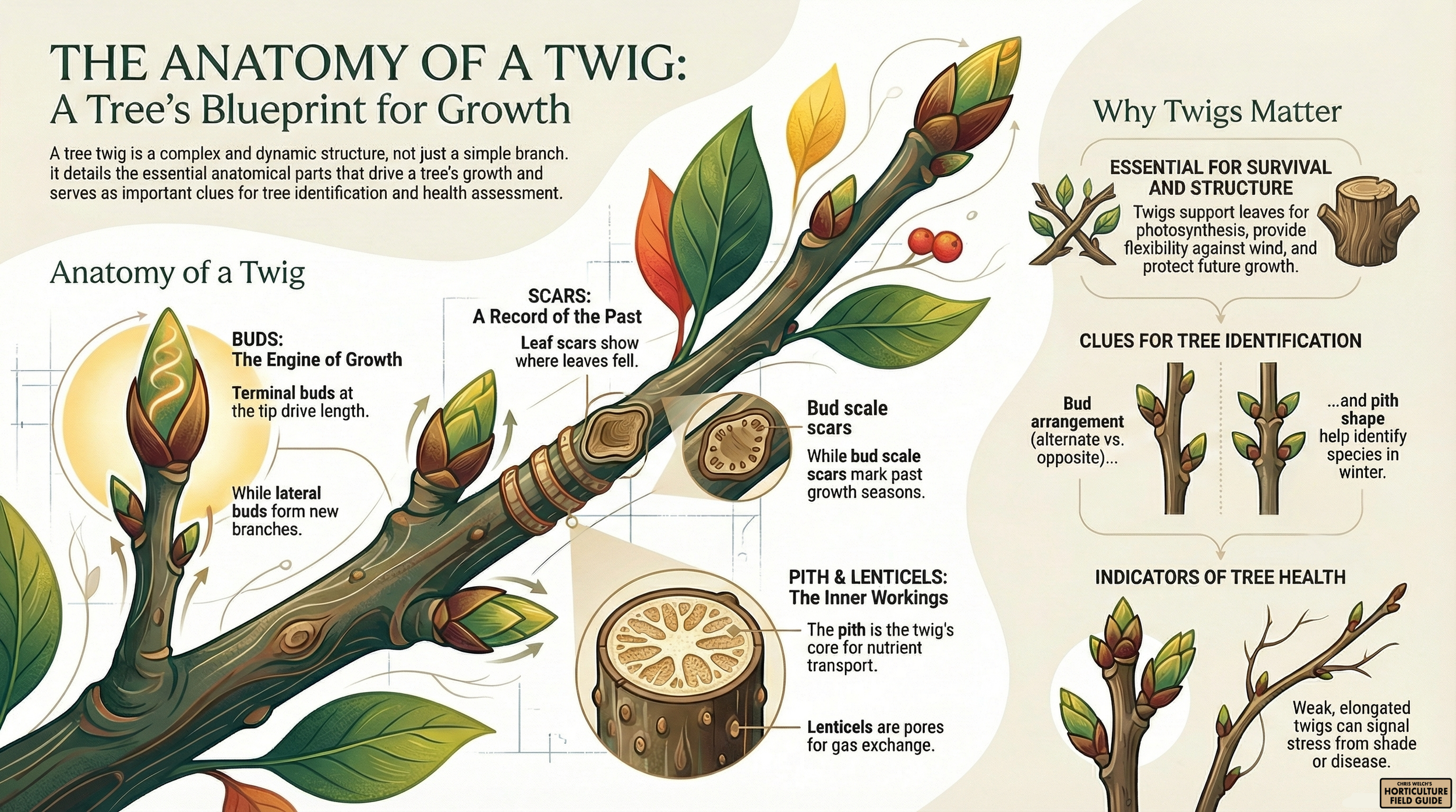
The Anatomy of Twigs: Growth, Transport, and Identification
The twig is far more than a mere branch extension; it is the tree's vital engine for growth, transport, and identification. This post explores the anatomy of the twig, detailing external features like the terminal and lateral buds that dictate growth patterns, and internal structures such as the xylem and pith responsible for transporting resources and storing nutrients.

Why We Should Capitalize Plant Common Names: A Call for Consistency
Ever notice how birds strut around with the royal treatment in their names? Black-capped Chickadee. Great Blue Heron.Every word is capitalized like a VIP guest at a garden party. Meanwhile, plants—those quiet, hardworking, oxygen-producing champs—are stuck with lowercase labels: bigleaf maple, snowberry, Japanese holly. It's not that plants matter less. It's just that we've been inconsistent. And I think it's time to change that.

The Anatomy of a Parterre Garden
Discover the key design elements and structural components of a Parterre garden. Learn how symmetry, geometric patterns, and carefully selected plants create this timeless landscape style. Perfect for garden enthusiasts and landscape designers alike!

Physiological Response of Trees to Temperature Extremes
Like other living organisms, trees are greatly influenced by the conditions of their surroundings, particularly temperature. Extreme temperatures, whether hot or cold, can significantly impact trees' health, growth, and overall functioning, ultimately affecting their survival.

Essential Nutrients with Potential Toxicity in Plant Health
Like any living organism, plants require various nutrients for their growth and development. However, when these nutrients are in excess, they can become toxic, adversely affecting plant health. Nutrient toxicity in plants can manifest in multiple ways, including stunted growth, leaf chlorosis, tissue necrosis, and increased susceptibility to diseases.

Serrate Leaf Margins: Nature's Saw-Toothed Design
Leaf margins, the outer edges of leaves, are pivotal in plant identification. Among the various types, the serrate margin, with its saw-like edge, stands out distinctly.
The term 'serrate' denotes a leaf margin with asymmetrical teeth pointing forward, akin to a saw's edge. This unique configuration on the leaf's edge augments the leaf's surface area, facilitating enhanced photosynthesis.
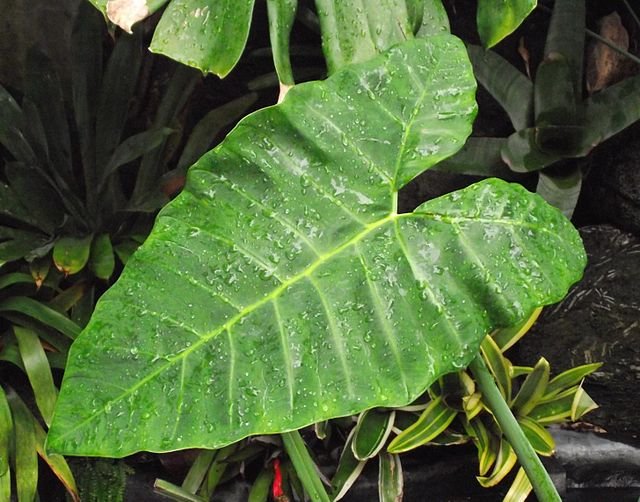
Leaf Shape: Sagittate
Sagittate leaves have an arrowhead shape, with two pointed lobes projecting downward at the base.